What PFS Helps You Protect: The Value of Your Sale.
Getting your shipment to Dakar is only part of a successful export transaction. The real challenge often begins afterwards, when buyers question the shipment, unexpected costs appear, responsibility becomes disputed, or your insurer needs the information required to assess a claim.
PFS exists to help exporters protect the commercial value of the sale they have already secured. By documenting significant events throughout the shipment's arrival and release, PFS helps exporters defend the agreed selling price, question costs they should not have to absorb, support legitimate insurance claims and enter commercial discussions from a stronger position.
Every Shipment Carries More Than Cargo. It Carries What You Stand to Lose.
When a shipment is worth real money, what's actually on the line was never the container. It's whether the deal holds, whether you end up conceding ground you shouldn't have to, and whether you'd be made whole if something genuinely went wrong.
By the time your shipment reaches Dakar, the hard work has already been done. You've found the customer, negotiated the contract, agreed the price, produced the goods and shipped them. The commercial value of that transaction is now exposed to questions, claims and decisions that can affect what you ultimately receive.
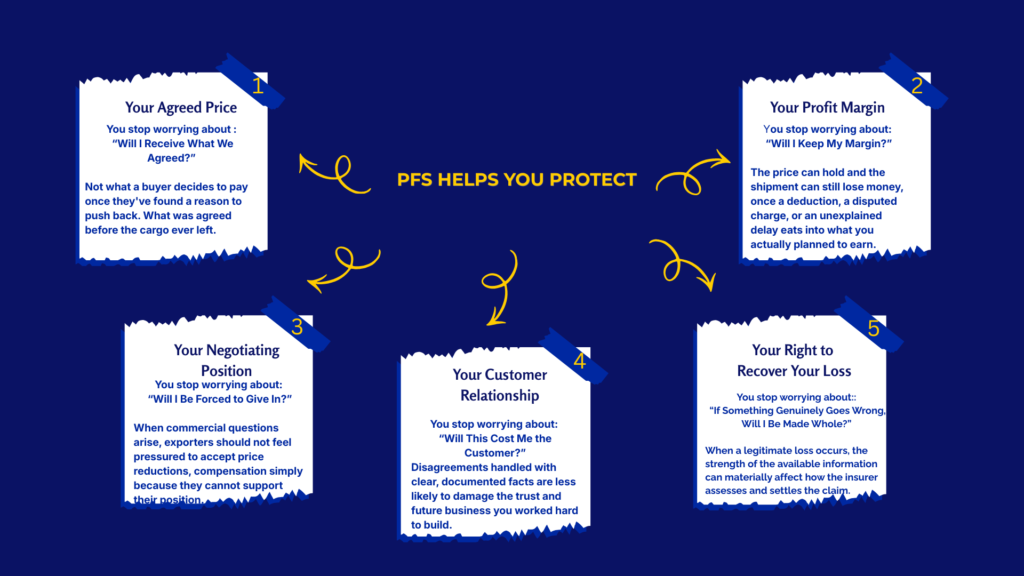
PFS exists to help exporters protect the things that matter most when those commercial questions begin:
- Your Agreed Price: Not what a buyer decides to pay after raising objections, but the amount agreed before the shipment left your facility.
- Your Profit Margin: A shipment can arrive successfully and still become less profitable once deductions, disputed charges, storage costs or delay-related expenses are absorbed.
- Your Negotiating Position: Exporters should not feel pressured to accept discounts, compensation demands or additional costs simply because they lack the information needed to defend their position.
- Your Right to Recover Your Loss: When a legitimate loss occurs, the strength of the available information can materially affect how the insurer assesses and settles the claim.
- Your Customer Relationship: Disagreements handled with clear, documented facts are less likely to damage the trust and future business you worked hard to build.
From Before Your Vessel Departs Until After It's Released.
The risks named above don't all appear at once, and they rarely appear at the moment you'd expect. A documentation problem surfaces before the vessel even leaves. A dispute over quantity or condition can surface weeks after the cargo has already reached your buyer.
PFS's protection isn't a single checkpoint, it covers the full window in which any of this can happen, from before departure, through everything that occurs at the port, to whatever gets raised once the shipment is already behind you.
PFS becomes involved before commercial questions begin, creating a factual record throughout the shipment's arrival process so that, if questions are raised later, the exporter is already in a stronger position to protect the agreed payment, question unnecessary costs and support legitimate claims.
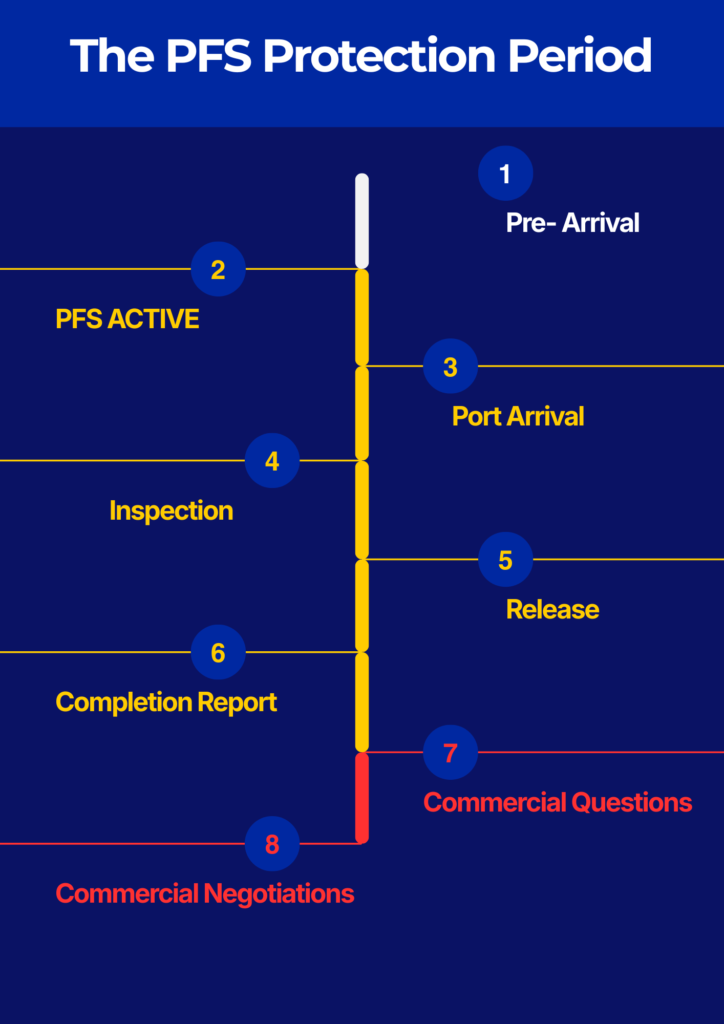
PFS operates before commercial questions begin, not afterwards.
By the time a buyer raises concerns, unexpected costs appear or an insurer asks for information, the most important events have already taken place. PFS helps ensure those events were documented while they were happening, before commercial discussions begin.That’s the difference between a report you receive once something has already gone wrong, and a record that was already being built before you knew you’d need it.
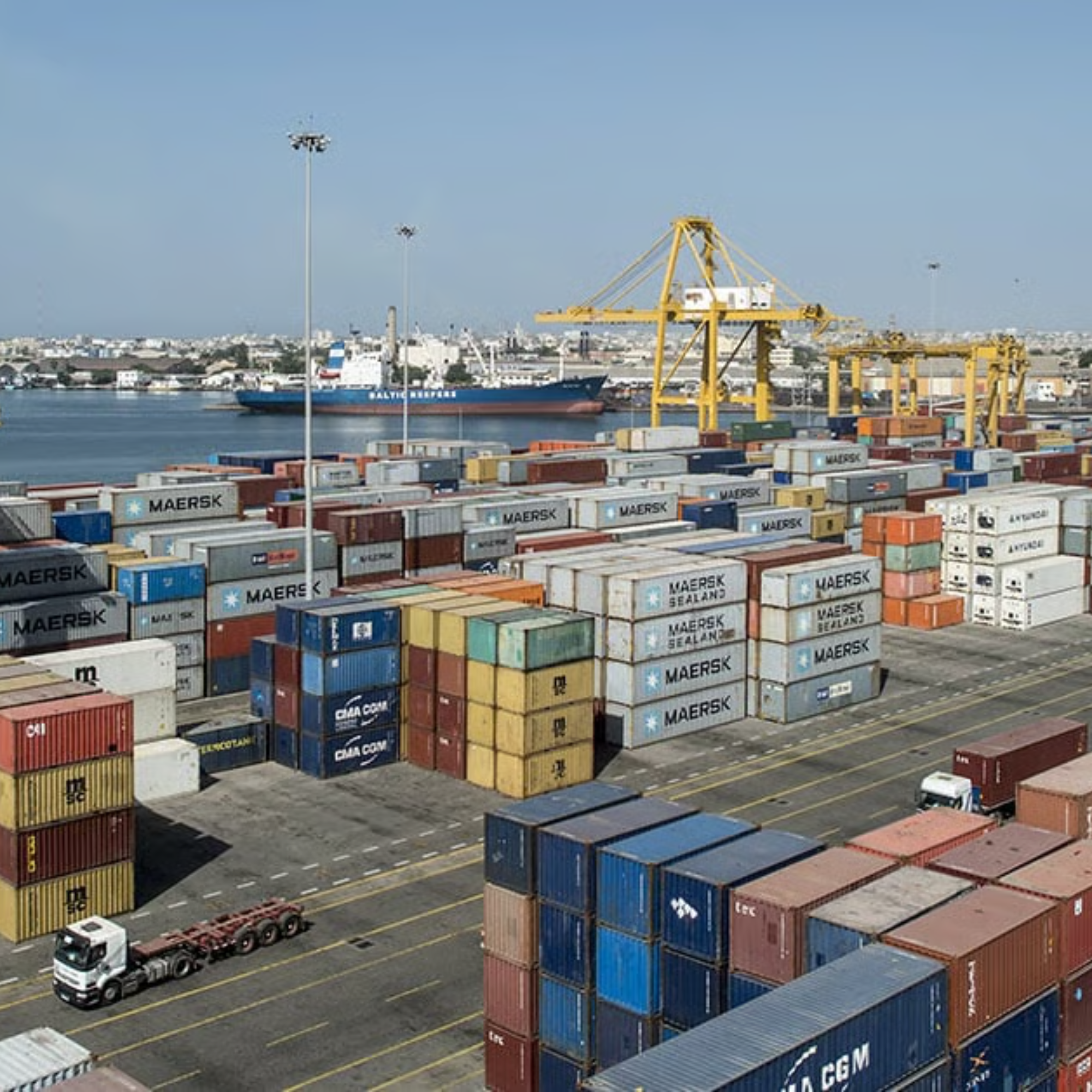
Five Risks. Five Ways PFS Changes the Outcome.
PFS helps exporters approach commercial discussions with greater confidence. When buyers raise concerns, additional costs appear or an insurance claim becomes necessary, exporters are better placed to protect the agreed payment, question unnecessary deductions, support legitimate claims and preserve the value of the sale they have already secured.
Because the relevant information was created while the shipment was arriving, being inspected and released, exporters are not starting the discussion from memory or assumptions. They are starting from a stronger commercial position, with facts.
Here's what changes, specifically, because PFS was involved.
- Your Agreed Price: When PFS documents the key events as they occur, the discussion no longer depends solely on what the buyer says happened after arrival. The exporter is able to rely on information created during the shipment itself, when responding to requests for price reductions or payment deductions.
- Your Profit Margin: When additional costs are raised after arrival, exporters are often asked to absorb them. By documenting the shipment's arrival, inspections, release and other significant operational events, PFS helps exporters examine whether those costs are actually justified before accepting, or challenging them.
- Your Negotiating Position: Commercial negotiations become stronger when both parties are discussing the same documented events rather than relying on different recollections. By creating that record before disagreements arise, PFS gives exporters a firmer basis for responding to buyer claims, requests for compensation or disputed responsibility.
- Your Right to Recover Your Loss: Insurance claims are assessed using the information available after a loss has occurred. By documenting significant events while they are taking place, PFS helps ensure there is more reliable information available when insurers and marine surveyors evaluate what happened.
- Your Customer Relationship: Many commercial relationships deteriorate because disagreements begin with conflicting versions of events. When questions can be answered using timestamped, independent evidence, discussions are more likely to remain constructive, focused on resolving the issue rather than arguing about what actually happened.
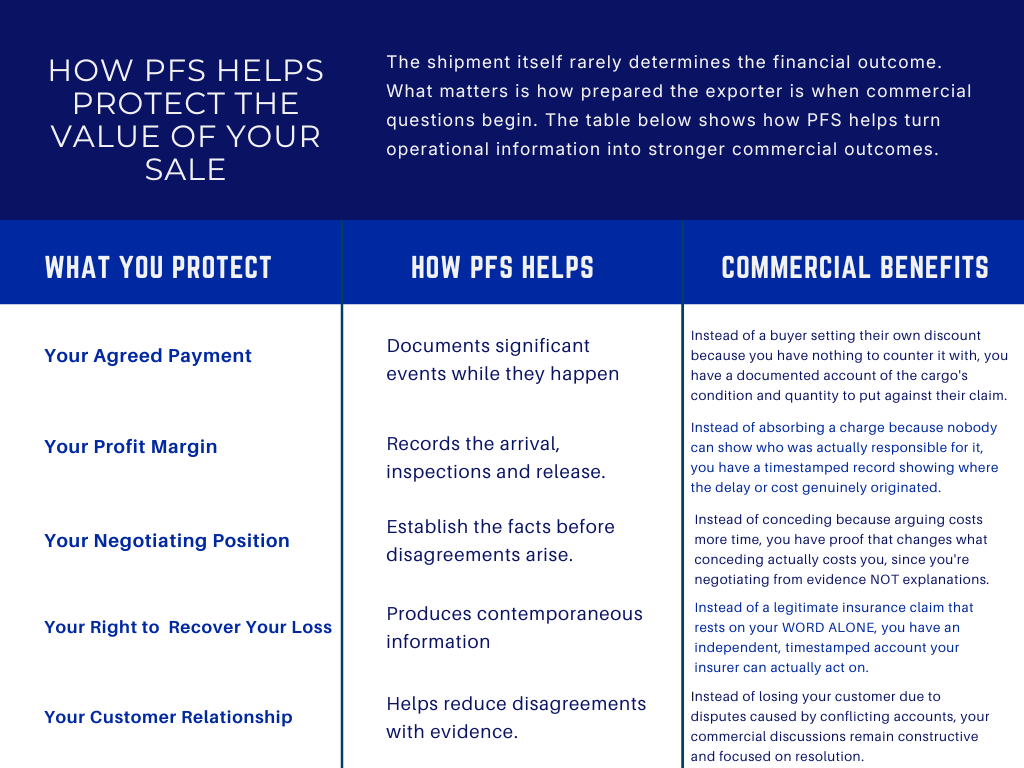
Everyone Involved in Your Shipment Has a Different Job. So Does PFS.
Most exporters shipping into Dakar already have a freight forwarder and a customs broker involved before PFS ever enters the picture. Nothing about that changes. PFS isn't replacing either of them, it's covering something neither of them is there to do.
Your Freight Forwarder coordinates the movement of the shipment. If a buyer later disputes the price, or a cost gets passed back to you, your forwarder isn't the one protecting your margin, that was never their job.
Your Customs Broker manages your declarations and formalities. If a charge appears that isn't yours to pay, your broker isn't the one who helps you challenge it, they were never engaged to defend your commercial position, only to clear your cargo.
Each of them has a defined, legitimate role, and does it well. None of those roles includes keeping the price you agreed, questioning unjustified costs, protecting your margin, avoiding commercial concessions, or helping you recover money you're entitled to once questions are raised. That's what PFS is there for.
PFS exists for one reason: to help exporters avoid losing money they should not have to lose. When commercial questions arise after the shipment arrives, exporters are better placed to defend the agreed payment, question unexpected costs, support legitimate insurance claims and preserve valuable customer relationships.
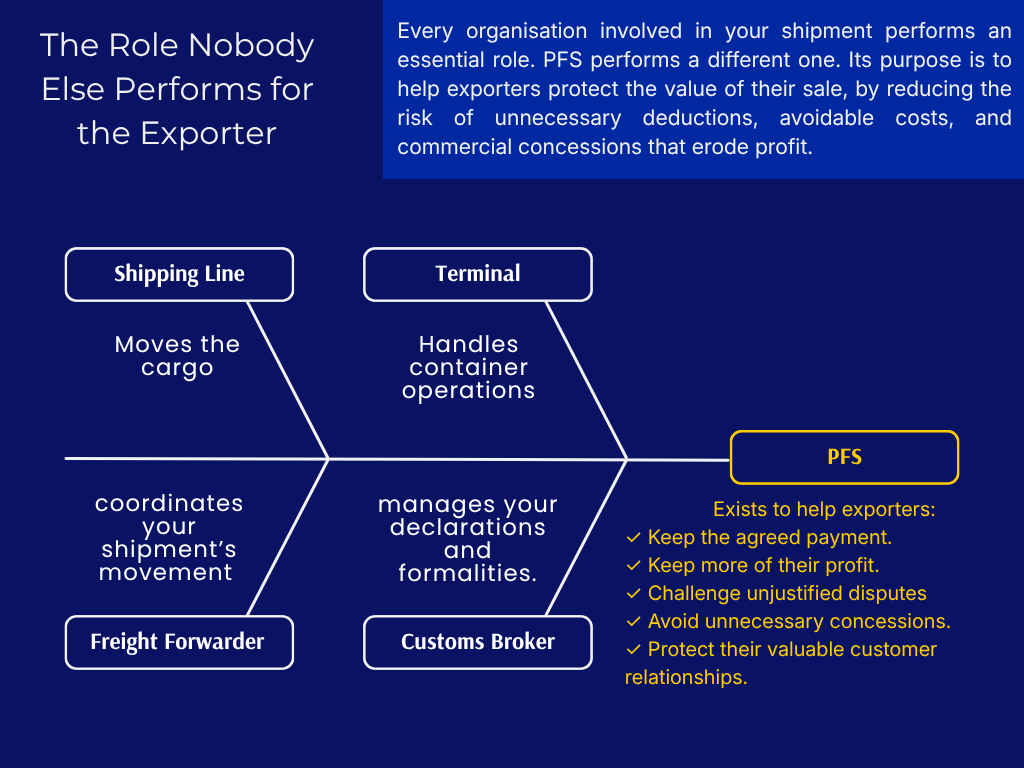
Built Around One Client. One Interest. One Responsibility.
PFS was designed so that its judgement, reporting and responsibilities remain aligned exclusively with the exporter who appointed it. Every aspect of our operating model is structured to protect that independence, both operationally and commercially.
The principles below explain how PFS remains independent throughout every engagement, ensuring that our responsibility, judgement and commercial alignment remain exclusively with the exporter who appointed us.
The following principles form the foundation of PFS's operational and commercial independence, ensuring that our work remains free from external influence throughout every engagement.
OPERATIONAL INDEPENDENCE:
1 - We Work Exclusively for the Exporter: Our responsibility is to you. We do not represent your buyer, your consignee, or any other party involved in the shipment.
2 - We Do Not Take Instructions from Your Buyer: Your buyer cannot influence our work, decide what we observe, or tell us how to report what happens.
3 - We Operate Independently of Every Port Stakeholder: PFS is not part of the shipping line, the terminal, the customs authority, your freight forwarder, or your customs broker. Our role stays separate from every organisation involved in your shipment.
4 - Our Role Is Defined by Your Written Instructions: PFS follows your instructions throughout the engagement. Our role doesn't shift because someone else has a different commercial objective.
5 - Every Shipment Is Handled to the Same Standard, Regardless of Cargo Value or Shipment Sizee: A single container and a multi-container shipment worth ten times as much receive the same attention, the same documentation, and the same rigour. Nothing about how carefully your shipment is handled depends on what it's worth.